A strategic material
Mobility, wind energy, sporting goods, aerospace and defence depend on its lightness, strength and reliability.
A new life for carbon fibre.
From recycled fibre to circular composite materials for structural applications: a European pathway that turns waste into a high-performance resource.
 AI-generated illustration.
Carbon fibre is strategic, but its waste needs a better industrial answer than incineration or landfill.
Carbon fibre delivers unmatched specific mechanical properties, yet its energy-intensive production and growing waste streams create an urgent environmental and industrial challenge.
Mobility, wind energy, sporting goods, aerospace and defence depend on its lightness, strength and reliability.
Production of carbon fiber consumes large amounts of energy and resources, while current recycling approaches remain inadequate.
Demand is growing by 7–10% annually, and post-industrial and post-consumer waste is rising with it.
Industrial processes can separate fibre from the matrix, and recycled carbon fibre retains properties close to virgin fibre. The real challenge is turning it back into a high-value material.
To deliver structural performance, recovered fibre must be oriented, processed and reintroduced into a new composite.
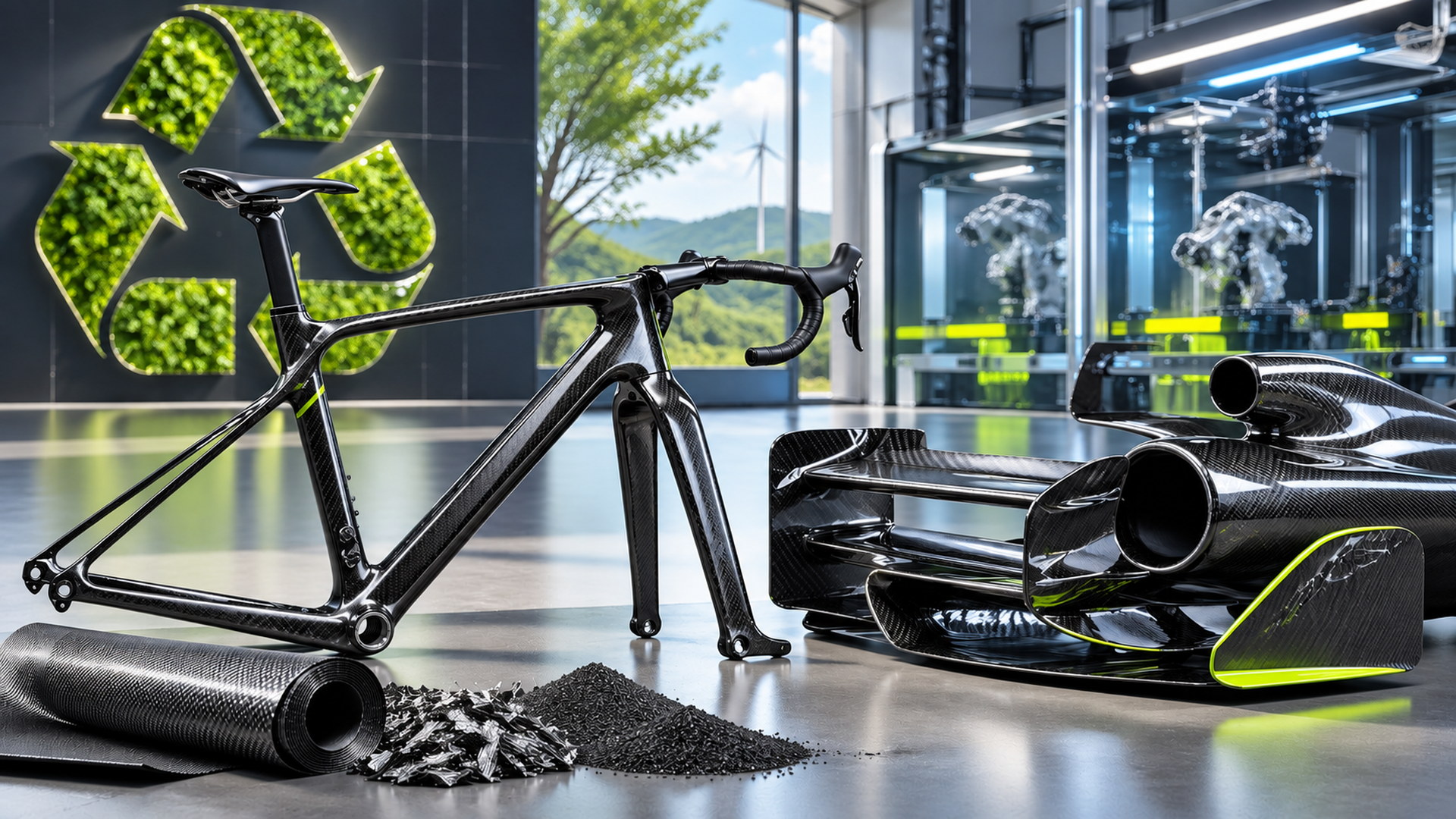 AI-generated illustration.
Bicycles, motorsport and industry become proving grounds for recycled, circular composites.
An integrated process transforms end-of-life composites and production waste into circular composite materials suitable for structural applications.
Collection of production waste and end-of-life composite parts.
Preliminary separation and preparation for recycling.
Separation of the fibre from the matrix and treatment of the recovered material.
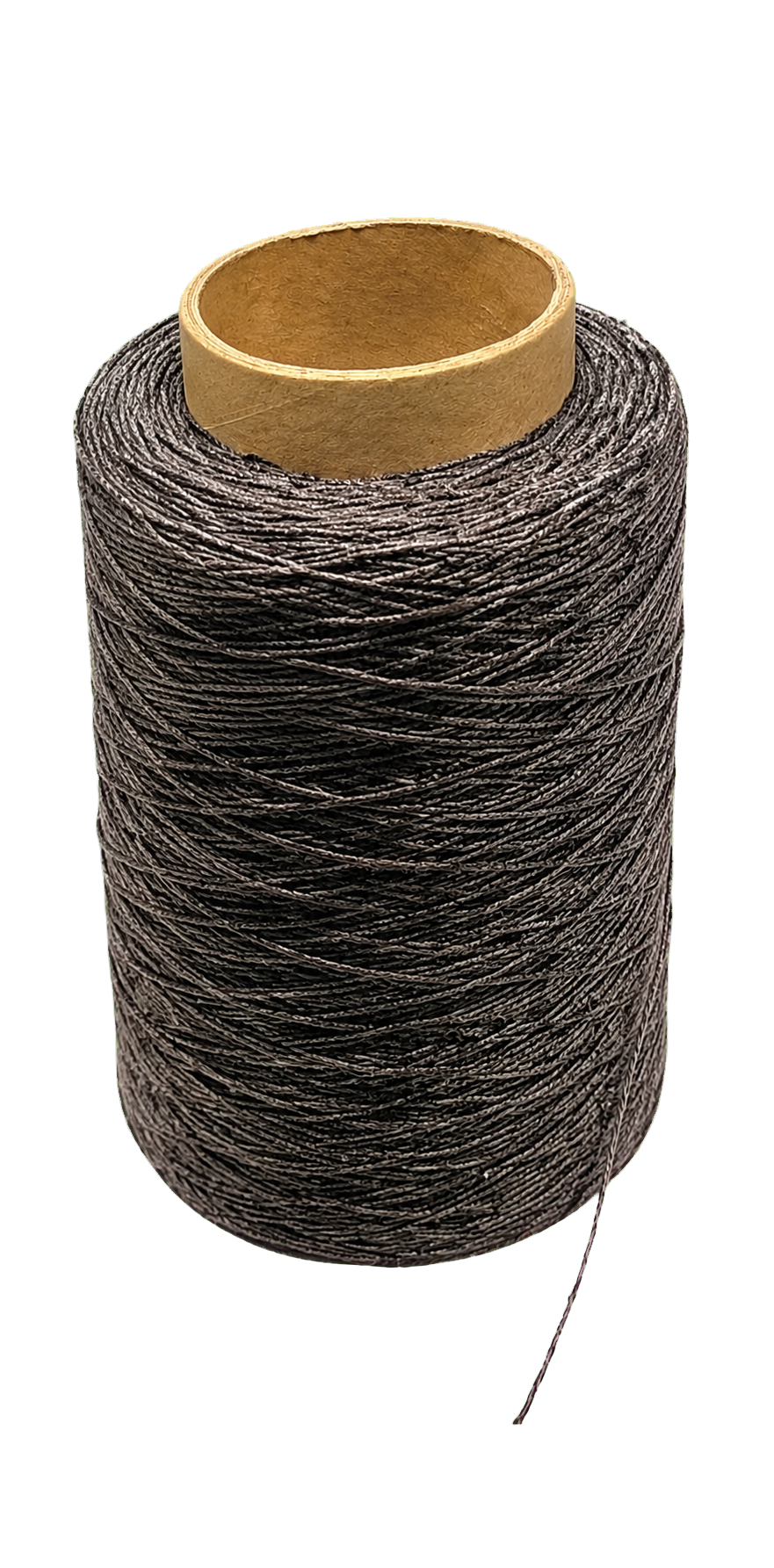
Production of an aligned yarn based on recycled carbon fibre.
Industrialisation of the textile technology and preparation of the composite.
Production of structural components for racing cars and bicycles.
36 months
Reusable products for structural applications, balancing performance, price, lower emissions and European industrial resilience.
of the mechanical properties of original composites.
CO₂ emissions compared with conventional processes.
initial installed staple fibre yarn production capacity.
estimated reduction in CO₂ equivalent emissions.
Six organisations from four European countries bring together recycling, research and industrial manufacturing to give carbon fibre a new life.

Race car constructor and carbon fibre chassis pioneer, developing race car components made from recycled carbon fibre.

Specialist in high-end carbon bicycle components, developing bicycle parts made with the project's recycled-fibre materials.

One of Europe's leading recycling companies, collecting, sorting and segmenting carbon fibre waste for the project.

Recovers carbon fibre from composite waste by thermolysis, then cleans and re-sizes it for yarn production.

Its Institute of Textile Machinery (ITM) develops and characterises recycled-fibre yarns and carries out life-cycle assessment.

Manufacturer of technical films, sandwich panels and prepregs, coordinating the project and its pilot yarn line.
Founded in 1972 by Gian Paolo Dallara in Varano de' Melegari (Parma), Dallara designs and builds racing cars that compete in many of the world's leading championships. Its core competences are design with carbon fibre composite materials, aerodynamics through wind tunnel testing and CFD, and vehicle dynamics.
Dallara introduced its first carbon fibre monocoque, the F385, in 1985. Today its composite know-how is concentrated in Dallara Compositi, its production centre, and DARC, the Dallara Advanced Composite Research Center.
Dallara is one of the two end users of the project's value chain. It develops race car components made with the recycled carbon fibre materials produced in LIFE-ARIADNE, demonstrating their use in semi-structural motorsport applications.
Based in Veitshöchheim, near Würzburg, all ahead composites GmbH was founded by Christian Gemperlein. Its core competences are the development, design, calculation and manufacture of fibre-reinforced plastic components, covering the whole product development cycle in-house, from the first idea to series production.
The company markets its high-end carbon bicycle components under the BIKE AHEAD COMPOSITES brand and also develops CFRP products and components for partners in research and industry.
All Ahead Composites is one of the two end users of the project's value chain. It develops bicycle components made with the recycled carbon fibre materials produced in LIFE-ARIADNE, testing them in high-performance cycling applications.
Stena Recycling is one of Europe's leading recycling companies and part of the family-owned Stena Metall Group. It collects, processes and recycles a wide range of materials, including metals, plastics, electronics, batteries, paper and complex industrial waste streams, turning millions of tonnes of waste each year into high-quality secondary raw materials.
The company was founded in 1939 in Gothenburg, Sweden, by Sten Allan Olsson and today operates across Europe, developing innovative recycling solutions for complex materials.
Stena Recycling covers the first stage of the value chain: the collection, sorting and segmentation of carbon fibre waste, both production scrap and end-of-life parts, including wind turbine blades, so that composite components can be separated and prepared for fibre recovery.
Composite Recycling SAS (Composite Recycling France) is the French company of Composite Recycling, a cleantech business founded in 2021 in Écublens, Switzerland, which opened its French subsidiary in Nantes in 2023.
Composite Recycling recovers glass fibre, carbon fibre and oil from composite waste using its thermolysis process, supplying secondary raw materials that allow recycled content to be used in new composites.
Composite Recycling France leads the work on thermolysis, fibre cleaning and re-sizing. It adapts its thermolysis process to the project's post-industrial and end-of-life waste, defines the fibre properties needed by the downstream steps and how the sizing is reapplied, and specifies and commissions a pilot re-sizing line at its site in France.
The Institute of Textile Machinery and High Performance Material Technology (ITM) at TU Dresden is one of the world's leading university research facilities in textile technology. Its interdisciplinary research covers machine design, new technologies and products, and material modelling, with a focus on lightweight engineering, textile-reinforced concrete and medical textiles.
This work includes innovative yarn and hybrid yarn constructions, 2D and 3D reinforcement structures, finishing and functionalisation technologies, and the machinery needed to produce them.
ITM is responsible for yarn development and characterisation and for the project's environmental and life-cycle assessment. The institute contributes many years of experience in developing high-performance fibre structures from recycled carbon fibres, helping turn carbon fibre waste into high-performance yarns for thermoset applications.
Founded in 2008 in Mondovì, Italy, 2Gamma builds on 50 years of industry experience. It manufactures technical thermoplastic films, sandwich panels and composite prepregs.
With more than 25,000 m² of production space, operations in the US and Japan and around 100 employees, 2Gamma provides the industrial link between research and application.
2Gamma is the project coordinator. It is responsible for the pilot yarn manufacturing line, industrialising the textile technology that turns recycled carbon fibre into oriented yarns for high-performance composites.
Contact the project team to discuss LIFE-ARIADNE, industrial applications for recycled carbon fibre or collaboration opportunities.
CEO, 2Gamma Composite
s.forzano@2gamma.it +39 333 620 7537Division manager
director@2gammacarbon.it. +41 79 359 08 85